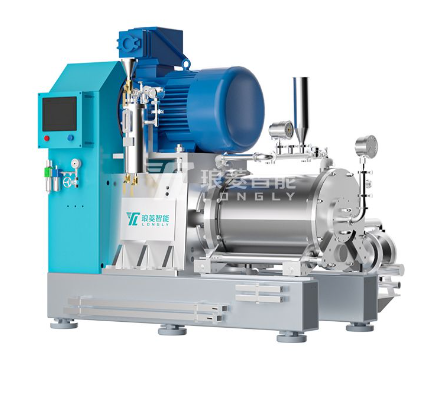
With the advancement of modern nano sand grinding technology and the improvement of product fineness requirements, the use of grinding media is increasing, and the progress of grinding media separation systems is also decreasing. The separation of small grinding media is one of the more difficult problems in the development of sand mills. So, what are the details about the grinding media requirements for nano sand mills?
1. Grinding medium size: The grinding medium used in the sand mill is mainly spherical. The smaller the diameter, the more media is loaded per unit volume, the more contact points between the balls, and the fineness of the product increases with the same grinding time. A small grinding medium can cause blockage of the sand mill outlet separator. Therefore, the structure of the sand mill separator and the width of the slit determine the size of the grinding medium. Usually, the diameter of the grinding medium is 2-4 times the gap width of the sand mill separator.
2. Filling rate of grinding medium: specific analysis based on actual situation. The required grinding effect: The filling rate of a horizontal sand grinder is generally 80-85%. The filling rate of a vertical sand mill is usually 75-80%. The filling rate of a horizontal sand mill is generally 85-95%. Quality measurement method=effective volume of sand mill × Loading rate (75-85%) × Dielectric bulk density. In short, the filling rate of the grinding medium is too high, which may cause the temperature of the sand mill to rise too high or the outlet to be blocked. Low filling rate of grinding medium, low grinding efficiency, increased wear, and prolonged grinding time.
3. Gravity of grinding medium: The larger the specific gravity of the medium, the greater the kinetic energy, and the higher the grinding efficiency. Steel balls with a diameter of 1.6-2.5mm are usually used for producing offset printing ink, while zirconia beads with a diameter of 0.3-0.8mm are used for abrasive inkjet ink.




 Home
Home