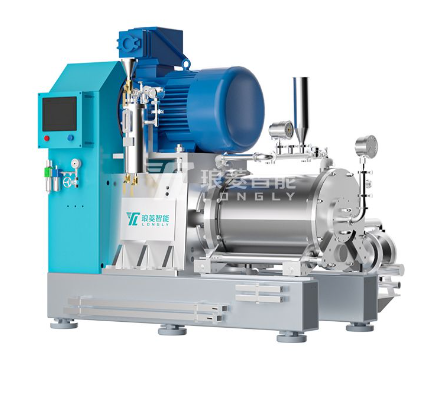
Horizontal sanding machines require regular lubrication to maintain good working conditions, and the selection of lubricating oil requires technical requirements such as the machining surface of the workpiece, the material of the horizontal sanding machine, the particle size of the abrasive, grinding methods, and process steps.
For example, a horizontal grinder uses large particle size abrasive for large excess rough grinding, and selects lubricants with large surface tension coefficient and viscosity. Due to the characteristics of thick oil film, high oil viscosity and buoyancy, the grinding efficiency will be greatly reduced. The grinding pressure between the workpiece and the surface of the horizontal grinder is shallow, resulting in slow cutting.
On the contrary, using lubricants with low surface tension coefficient and low viscosity for horizontal grinding machines will accelerate the fragmentation of abrasive particles and ensure high grinding efficiency. In this way, it is necessary to choose a lubricant with moderate viscosity according to the specific situation, which plays a good role in the equipment.
When selecting lubricants for horizontal sand mills, it is required that the selected products have good lubrication and cooling effects, viscosity, and dilution ability to ensure that the positive grinding has conditions of no accumulation and uniform distribution. Make the abrasive particles adhere to the surface of the horizontal grinding machine. The viscosity of general lubricating oil is between 1.2-2.5e/20 ℃.
At the same time, try to choose lubricants that are less affected by temperature changes, and lubricants should be easy to clean. In addition, lubricating oil should be suitable for horizontal sanding machines with different processing speeds to improve the surface smoothness of the workpiece without scratching it. Can lubricating oil accelerate grinding speed and improve grinding efficiency.




 Home
Home