preface
In addition to the particle size, viscosity, surface tension, conductivity, and pH value of ordinary ink, the performance requirements for ceramic ink also include some special properties for ceramic pigments based on the characteristics of ceramic ink applications:
(1) Ceramic pigment powder is required to maintain good chemical and physical properties in solvents, and after long-term storage, there will be no chemical reactions, agglomeration, precipitation, and other phenomena.
(2) The requirement during the printing process is that ceramic pigment particles can be arranged in an effective stacking structure in a short period of time, adhere firmly, and obtain a high-density printing layer, so as to have a high sintering density after calcination.
(3) After processing to the target particle size, the color saturation of the pigment does not decrease significantly. The pigment is stable after high-temperature firing, and has good color rendering performance and matching performance with the glaze.
Below, we will elaborate on the technical key points of the production of cobalt blue ink color, zirconium praseodymium yellow ink color, agate red ink color, black ink color, and brown ink color.
1. Cobalt blue ink pigment
-1.1 Production process flowchart of cobalt blue material:

-1.2 Technical points:
(1) During the high-temperature sintering process of cobalt blue material, the heating rate should be appropriately reduced within the dehydration range of 250-500C aluminum hydroxide to ensure complete low-temperature dehydration of aluminum hydroxide, which is beneficial for the balanced growth of CoAl2O and crystals. The main crystalline phase of cobalt blue calcined at 900~1050 ° C is CoAl2O, spinel, with a color of blue-green. Above 1100 ° C, it transforms into CoAl2O, spinel, with a color of blue.
(2) The optimal firing temperature for cobalt blue synthesized from ultrafine aluminum hydroxide is 1150-1200 ° C, and the insulation time is 4-5 hours.
(3) The wet grinding of cobalt blue material should achieve a fineness of 325 mesh and a sieve residue of<0.1%; Ensure that there is no sedimentation or blockage in the grinding process. The sand grinding of cobalt blue material should use zirconium balls of 0.6-1.0mm. At the beginning of sand grinding, the ratio of material to water is 1:1 to 1.5 (mass ratio). By the end of sand grinding, it gradually increases to a ratio of 1:1 to 2, and prevents a significant increase in the temperature of the slurry during the sand grinding process. Sand grinding controls the particle size of cobalt blue material to D50<0.8 μ m, D90<1. two μ m。
12 Zirconium praseodymium yellow ink pigment
-2.1 Formula of zirconium praseodymium yellow ink pigment:
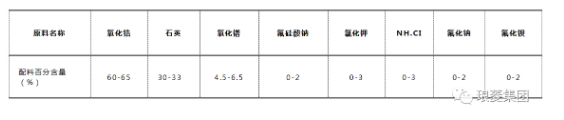
- 2.2 锆镨黄色料的生产工艺流程

△ Technical tips:
Zirconium praseodymium yellow is used as a pigment for ink, and the amount of mineralizer in the formula is much less than that of conventional praseodymium yellow pigment. The uniformity of mineralizer in semi-finished products must be noted. The crushing of finished color materials can also be done using wet sand grinding, in addition to using airflow grinding.
-2.3 Technical points:
(1) In order to ensure that the wrong elements in the zirconium praseodymium yellow pigment can be more doped into the crystal lattice of zirconium silicate, and the resulting color pigment crystal particles are small and uniform, the amount of mineralizer used should be minimized, and the firing temperature should not be too high. It is necessary to ultrafine crush the semi-finished zirconium praseodymium yellow material. Ultrafine crushing can be achieved through a sand mill.
(2) In order to ensure that the screen is not blocked and the slurry does not settle during the grinding process, the color material should be ball milled and crushed before grinding. Silicon balls or zirconium balls should be selected for ball milling, and alumina balls cannot be used. A small amount of impurities in alumina can affect the synthesis of praseodymium yellow pigment.
(3) The fineness of ball milling should reach 325 mesh full pass. It is advisable to choose zirconia balls with a size of 0.4-1.0mm for the grinding ball of the sand mill.
13. Agate red ink pigment
Agate red is one of the few ceramic pigments that appears red, especially when used for coloring at high temperatures, resulting in a beautiful agate red color in the corresponding basic glaze.
-3.1 Process flow chart for preparing agate red ceramic pigment:
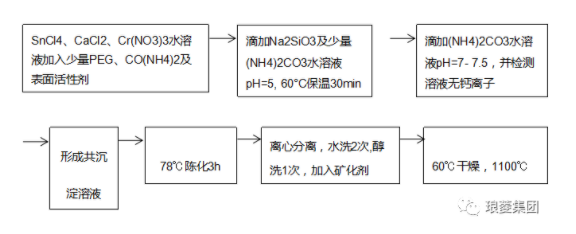
△ Technical tips:
From the perspective of coloring mechanism, agate red is a solid solution formed by the solid solution of Cr4+ions in sphene. Chromium is not the basic component of tin titanite, so grind the agate red material to the fineness that ink can use (<1.0 μ m) The color saturation of agate red material will significantly decrease.
-3.2 Technical points:
(1) To make agate red material usable in ink, it should be processed to an average particle size in the range of 300-500nm without a significant decrease in color saturation.
(2) The ultrafine sand grinding of semi-finished agate red material is an important process. Before sanding, in order to prevent the raw materials from blocking the mesh during the sanding process, it is necessary to first use wet ball milling to grind the slurry to 325 mesh and pass through. Silicon balls are selected for ball milling. The zirconium ball selected for the sand mill should be a small ball of 0.6-0.8mm. During the sand grinding process, suitable grinding aids should be selected, otherwise it is necessary to μ It is difficult to grind the powder below m.
(3) At the beginning of raw material sand grinding, the material to water ratio is approximately 1:2 5. As the sand grinding progresses, water should be gradually added. At the end of the sand grinding, the general material to water ratio should reach 1:3.5. The fineness of the finished agate red product reaches D: 50<1 0pm, D9o<1. five μ m。 Further fine grinding can be carried out during ink making.
14. Black ink pigment
There are many types of black ceramic pigments, but it is still not easy to manufacture black pigments that are pure and widely adaptable in glazes. The application of ceramic inkjet printing technology has increasingly high requirements for pigments. The preparation of ultrafine and narrow particle distribution black pigments is of great significance.
-4.1 Co Cr Fe Ni Mn black pigment formula:

-4.2 Technical points
(1) The ultrafine grinding of CoCrF-Ni.Mm black pigment semi-finished products can be carried out using a sand mill.
(2) Before sanding, wet ball milling should be used until all the slurry has passed the 325 mesh sieve. Sand grinding of semi-finished products to control the fineness of semi-finished products within D50<0.8 μ m, D9o<1. two μ m。 Fine grinding of finished products to control fineness to D50<1. I μ m, D90<1. six μ m。 Further fine grinding can be carried out during the production of ink.
5.0 Brown Ink Color
-5.1 Formula composition of brown pigment
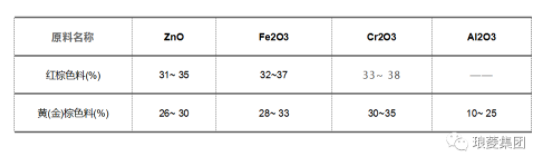
-5.2 Production process flow of brown pigment

Technical tips:
In the process of processing brown pigment, the finished product can be directly crushed by airflow mill. Using this processing process, the raw materials used for ingredients require high purity, and mineralizers are not added to the formula. If the conductivity of the product cannot meet the requirements, wet sand grinding should be used for the crushing of the finished product. After sand grinding, a pigment rinsing process needs to be added.
-5.3 Technical points
(1) The brown color material undergoes ultrafine grinding in the sand mill during the processing of semi-finished products, so the sintering temperature required is slightly lower than that of ordinary brown color materials. But in order to make the crystals synthesized with ink pigments more complete, in actual production, they are fired at the same temperature as ordinary brown pigments.
(2) When firing yellow brown colored products, 30C is the dehydration temperature of the ammonia oxidation pot, and the heating rate should be appropriately reduced.
Contributed by LONGLY Technical Team




 Home
Home