Coating is a kind of viscous liquid that is coated on the surface of protected or decorated objects and can form a continuous film firmly attached to the coated objects. It is usually made of resin, or oil, or lotion, with or without pigments, fillers, additives, and organic solvents or water; And what we usually refer to as paint is just one of them. Coatings belong to organic chemical polymer materials, and the film formed belongs to the type of polymer compound. According to the classification of modern chemical products, coatings belong to fine chemical products.

Coatings, as a polymer compound, are originally made of relatively large particles or blocky color blocks or pigments. These materials are not necessarily soluble in resin, oil or lotion. They only play the role of mutual adhesion and solidification, and pigments are the main components of coloring. So if in the early stage, the added oil and grease has relatively large particles, then when the paint coating is applied to the surface of the object, it will show a lot of large particle feeling, and even there will be many large particle precipitated pigments in the container of the paint coating.

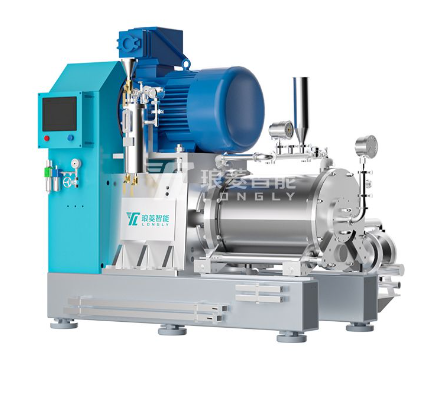
So when producing coatings and paints, a sand grinder is usually used to finely grind the raw materials. Of course, there are many types of sand mills, and the grinding effect and particle fineness achieved by different sand mills are different. According to their performance, they can be roughly divided into rod pin high sand mills, basket type sand mills, vertical sand mills, turbine type sand mills, and so on. However, considering the size of paint particles, which can reach tens or even hundreds of micrometers, most of the sand grinders used are blue sand grinders, and the replacement of color materials is faster.

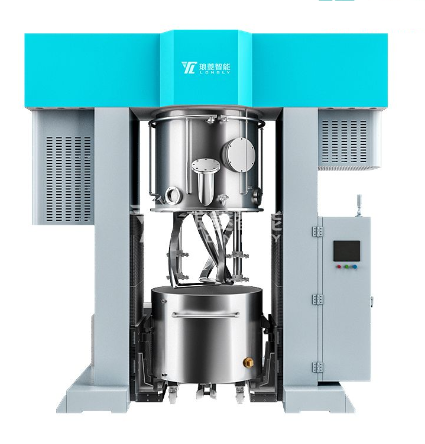
The Langling basket type sand grinder LBM series adopts a unique basket type rotation design, which has high grinding efficiency, convenient material replacement and cleaning, and saves labor. It is suitable for small batch production of multiple varieties; Traditional mixing and dispersion require an effect that cannot be achieved within hours. Mainly used in laboratories for frequent scientific experiments, production simulations, and new product development of different materials such as dyes, paints, inks, lithium batteries, and other industrial and scientific research units. Main technical advantages: unique basket rotation design, fresh and convenient color changing, and labor saving; Matching the size of the grinding bucket and basket, high grinding efficiency; The transmission shaft and material cylinder cover are sealed reliably to prevent solvent evaporation; No need for pipeline or pump mechanical seals to avoid logistics loss and environmental pollution, suitable for multi variety and small batch production.




 Home
Home