Lithium new energy is a new theme in current society, and various countries and regions are committed to the production and development of lithium batteries. However, China places greater emphasis on the research and production of lithium batteries and has achieved remarkable results worldwide. When it comes to lithium-ion batteries, it is inevitable to talk about the conductive agent carbon nanotubes. In order to ensure good charging and discharging performance of the electrodes, a certain amount of conductive material is usually added during the production of the electrode plate, which collects micro currents between the active materials and between the active materials and the collector, in order to reduce the contact resistance of the electrode and accelerate the movement rate of electrons. At the same time, it can effectively improve the migration rate of lithium ions in the electrode material, Thus improving the charging and discharging efficiency of the electrode.

Carbon nanotubes are a one-dimensional quantum material with a special structure (with a radial size of nanometers, an axial size of micrometers, and basically sealed at both ends of the tube). Carbon nanotubes are mainly coaxial circular tubes composed of several to dozens of layers of carbon atoms arranged in a hexagonal shape. Maintain a fixed distance between layers, approximately 0.34nm, with a diameter generally of 2-20nm. As a new type of material, carbon nanotubes have shown enormous application potential in various fields since their discovery due to their excellent electrical, mechanical, chemical and other properties.

Carbon nanotubes are important auxiliary materials for lithium-ion batteries. Not directly involved in electrochemical reactions; Although the proportion of conductive agents in the weight of the battery is relatively small, it greatly affects the performance of lithium-ion batteries; Reasonable use of conductive agents can improve battery cycling performance, capacity utilization, and rate performance. The first thing that carbon nanotube conductive agents do is to improve electronic conductivity, which acts as a microcurrent between active substances and active substances, reducing the contact resistance of electrodes and increasing the movement rate of electrons. Secondly, it promotes the infiltration of electrolyte into the electrode plate, increases the migration rate of lithium ions in the electrode material, reduces polarization, and thus improves the charging and discharging efficiency of the electrode and the service life of the lithium battery.

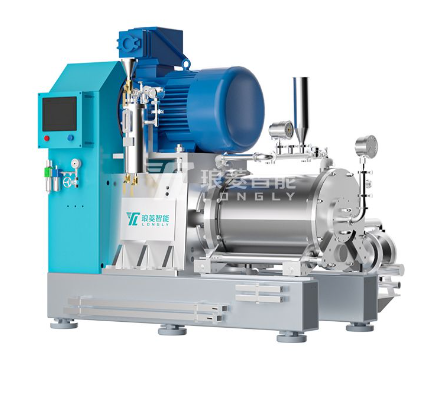
Carbon nanotubes and graphene are currently the two most outstanding nanomaterials in conductive agents, with carbon nanotubes and graphene mainly supplied in the form of dispersions (i.e. slurries). The production of carbon nanotubes will use sanding equipment. Sand mills are mainly used for wet grinding of chemical liquid products, and can be roughly divided into horizontal sand mills, basket sand mills, vertical sand mills, etc. based on their performance. It mainly consists of the machine body, grinding cylinder, grinding disc (lever), grinding medium, motor, and feeding pump, and the speed of feeding is controlled by the feeding pump.




 Home
Home