Suspension agents are one of the very important pesticide formulations in modern pesticides, and are also one of the four environmentally friendly formulations recommended by the Food and Agriculture Organization of the United Nations (FAO). Pesticide formulations will gradually develop towards safety, environmental protection, and water-based. Pesticide suspension agents will be the most commonly used pesticide formulations in the future. The dispersibility and spreadability of suspension agents are relatively good, with high suspension rate, strong adhesion ability to plant surfaces, and resistance to rainwater erosion. Therefore, their efficacy is more significant and long-lasting than that of wettable powders.

Pesticide anti precipitation agents generally refer to suspension agents. Suspension agent refers to a preparation that uniformly disperses solid pesticide raw materials in water with particles below 4 microns, with the international code SC. Due to the fact that SC does not have the problem of dust flying like WP, is not flammable and explosive, has a small particle size, high biological activity, a large specific gravity, and a small packaging volume, making it safer and more environmentally friendly compared to other pesticide formulations. Therefore, SC has become the pesticide variety with a larger tonnage in the new water-based pesticide formulations. The particle size of the suspension agent is fine, with a general particle size of 0.1-3 μ m. High suspension rate and better efficacy than wettable powder; No use of organic solvents, low volatility, low toxicity, and safety for humans and animals; Non flammable and explosive, safe for storage and transportation, suitable for aircraft spraying. To prevent product decomposition, sedimentation, agglomeration, freezing, etc., stabilizers, antifreeze, etc. need to be added.
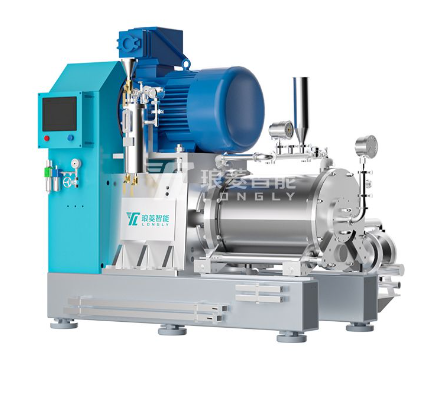
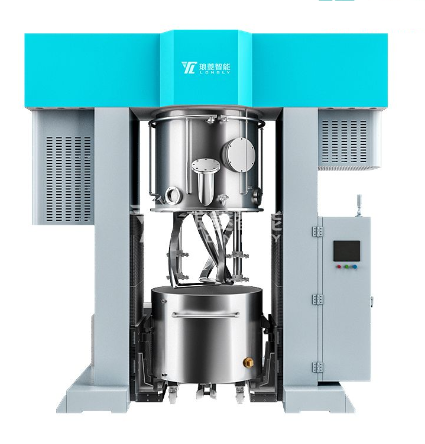
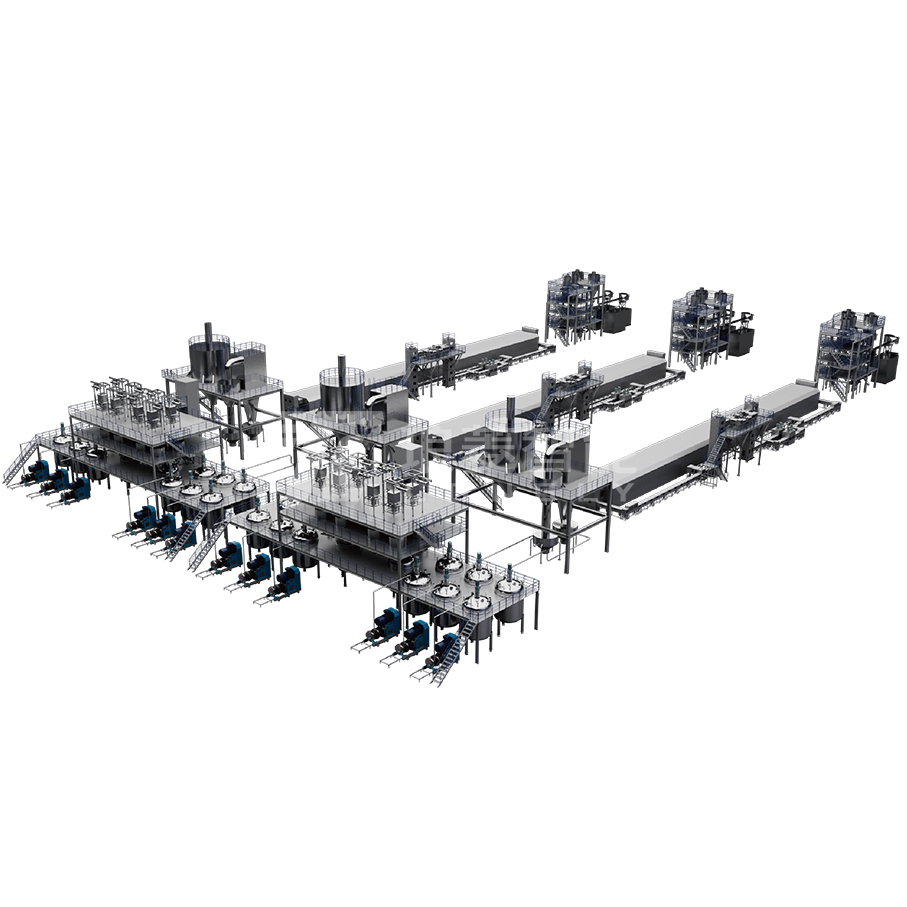
Pesticide suspension agent grinds solid pesticide raw materials to a particle size of 0.1-3 μ m. The presence of Langling LDM sanding machine is necessary. Sand mill, also known as bead mill, is a device that uses hard and wear-resistant zirconium beads, glass balls, and other materials to rotate in a closed cavity to grind suspension agents. It is mainly used for wet grinding of chemical products and is widely used for dispersing and grinding suspension agents, coatings, inks, and other production processes. The sand mill is the most adaptable, advanced, and efficient grinding equipment for materials. The grinding chamber is the narrowest, the lever clearance is the smallest, and the grinding energy is the densest. Coupled with high-performance cooling systems and automatic control systems, it can achieve continuous processing and discharge of materials, greatly improving production efficiency.

The grinding effect of a sand mill is, in a sense, irreplaceable. In the increasingly fierce competition in the powder market and facing the pressure of foreign powder product challenges, Langling has learned and adopted advanced technology to develop equipment that meets market demand and improve equipment quality. Langling hopes to provide more material enterprises with grinding and dispersion equipment with higher cost-effectiveness. The LDM-D series of Langling Sand Grinder adopts an upgraded rod-pin grinding structure and a high-end power system, with sufficient pressure, high speed, and stable operation. According to the specific requirements of the product, the machine can be designed according to different materials (such as polyurethane, ceramics, wear-resistant steel, tungsten carbide), and can use small pickaxe beads. The patented dynamic screen system has a large flow rate and is not clogged. It is a high-end automotive paint, industrial paint, furniture paint, ink, etc Ideal choice for industries such as color paste, pigments, pesticides, etc.




 Home
Home