Aluminum oxide powder is a process raw material, which is made from industrial aluminum hydroxide or industrial aluminum oxide as raw material. Aluminum oxide powder is a white amorphous powder that is difficult to dissolve in water. Aluminum oxide powder is suitable for surface beautification treatment of various high-end products, processes, or hardware products. After sandblasting, the surface is white and free of any impurities, eliminating cleaning troubles. Nowadays, the production process of aluminum oxide powder is becoming increasingly advanced, and it can already produce aluminum oxide powder below 1 micron. So what are the characteristics and uses of such fine aluminum oxide powder?

Firstly, the role of aluminum oxide powder in the ceramic manufacturing process. Aluminum oxide powder, like brown alumina, can be divided into calcined alumina and ordinary industrial alumina when used as ceramics. Calcined alumina is an essential raw material for producing antique bricks, while industrial alumina can be used for producing microcrystalline stones. In traditional glazes, alumina is often used as a whitening raw material. Due to the popularity of antique bricks and microcrystalline stones in the market, the usage of alumina has also been increasing year by year.
Secondly, alumina has high corrosion resistance and is often used in the production and strengthening process of glass. Aluminum oxide is a major factor that makes metal aluminum less susceptible to corrosion in the air. Pure metal aluminum easily reacts with oxygen in the air, forming a thin layer of aluminum oxide film covering the surface of aluminum exposed to the air.

Thirdly, alumina has high thermal conductivity. Aluminum oxide powder can be filled with high density, and compared to crystalline silicon powder, a mixture with high thermal conductivity and good heat dissipation can be obtained. So it is also the basic raw material for manufacturing metal aluminum; It is also used for making various refractory bricks, refractory crucibles, refractory pipes, and high-temperature resistant experimental instruments; It can also be used as abrasives, flame retardants, fillers, etc; High-purity α Type alumina is still the raw material for producing artificial corundum, artificial ruby, and sapphire; It is also used for the production of modern large-scale integrated circuit boards.

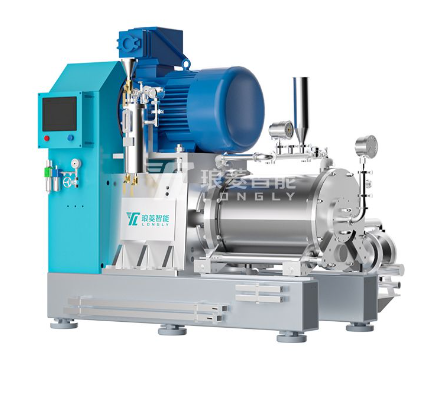
Of course, aluminum oxide powder has other uses, such as low wear resistance and high filling ability. In the manufacturing and production process of aluminum powder, the presence of grinding machines (sand mills) is required. Sand mills belong to wet ultrafine grinding equipment, developed from ball mills and widely used in the dispersion and grinding of pigments in the production process of nano new material powders, electronic ceramics, ceramic ink, ink generation, etc. Compared with grinding equipment such as ball mills, roller mills, and colloid mills, sand mills have the advantages of high production efficiency, strong continuity, low cost, and high product fineness. There are significant differences in process conditions, and the fineness requirements can be adjusted and classified by adding or subtracting appropriate grinding media. The sand mill overcomes the shortcomings of the traditional horizontal sand mill, such as uneven distribution of grinding medium and poor particle size distribution after grinding.




 Home
Home