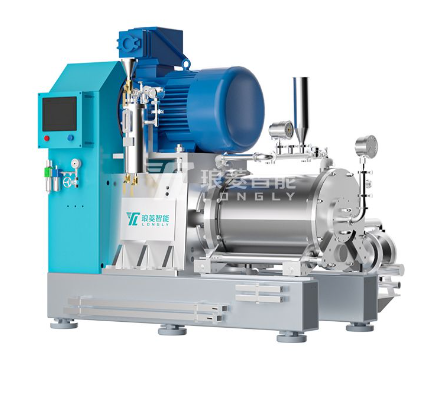
Sand mill, also known as bead mill, is mainly used for wet grinding of chemical liquid products. It is the most adaptable, advanced, and efficient grinding equipment with the narrowest grinding chamber, the smallest lever clearance, and the densest grinding energy. Coupled with high-performance cooling systems and automatic control systems, it can achieve continuous processing and discharge of materials, greatly improving production efficiency. The sand mill mainly consists of the machine body, grinding cylinder, disperser, bottom valve, motor, and feeding pump, and the speed of feeding is controlled by the valve.
Compared with grinding equipment such as ball mills, roller mills, and colloid mills, sand mills have the advantages of high production efficiency, strong continuity, low cost, and high product fineness. Grinding energy is intensive, and combined with high-performance cooling systems and automatic control systems, they can achieve continuous material processing and discharge, greatly improving production efficiency. The sand mill can be divided into disc type, rod pin type, and rod disc type according to the structural shape of the mixing shaft; According to the layout of the grinding cylinder, it can be divided into vertical and horizontal types; According to the volume of the cylinder, it can be divided into laboratory, small, medium, large, and super large (or 0.5l, 1L/30L, etc. based on the volume integral); According to the medium separation method, it can be divided into static and dynamic separation sand mills.
The working principle is to use a material pump to input the solid-liquid mixture material that has been pre dispersed and wetted by a mixer into the cylinder. The material and the grinding medium inside the cylinder are stirred by a high-speed rotating disperser, resulting in stronger collision, friction, and shear effects between the solid particles in the material and the grinding medium, achieving the goal of accelerating the grinding of fine particles and dispersed aggregates. The dispersed material after grinding is separated from the grinding medium through a dynamic separator and flows out from the discharge pipe. The working parameters of the sander affect the grinding materials, and the flow of the sander affects the product fineness, output and particle size distribution. The size of the medium affects grinding efficiency and product fineness. The speed of the stirring axis affects grinding efficiency, material fineness, and wear. The specific gravity of the medium affects grinding efficiency and product fineness. The filling rate of the medium affects the grinding efficiency and product fineness.
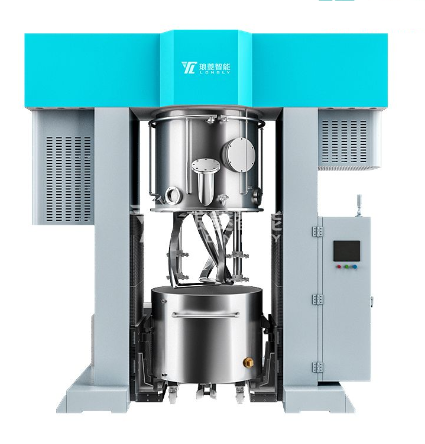
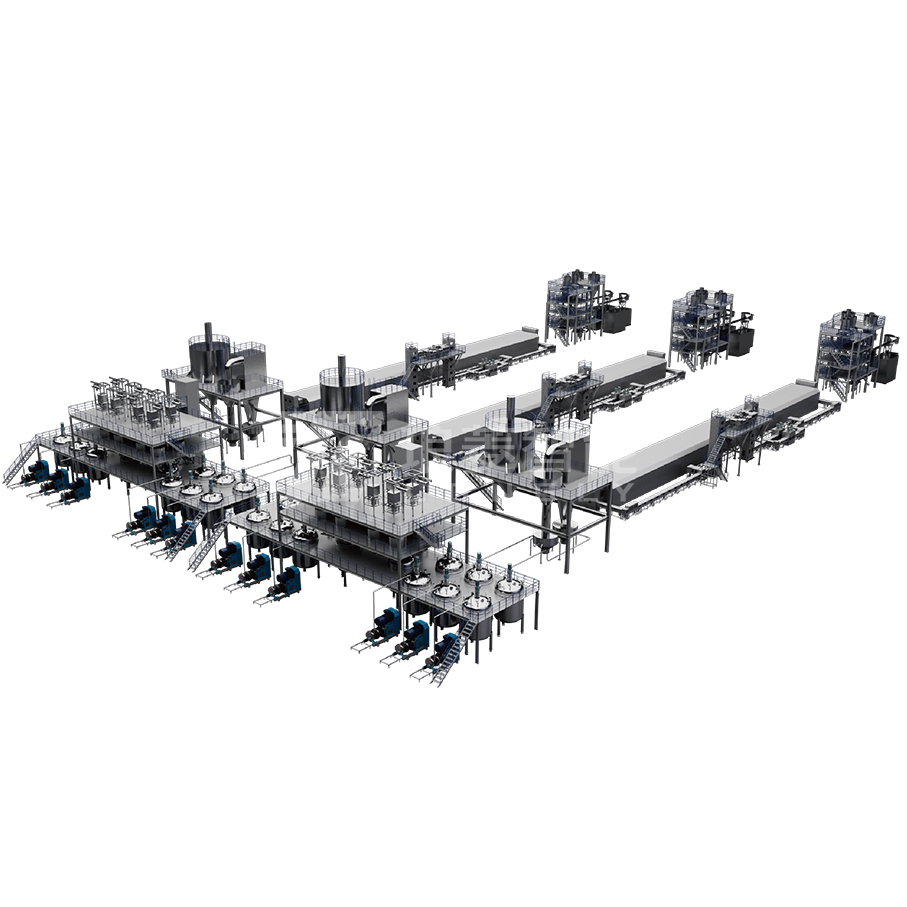
Dongguan Langling Machinery Co., Ltd. is a supplier specializing in wet grinding equipment systems and solutions. Its products are mainly high-end experimental grinding machines, specialized grinding machines, and complete sets of equipment. It integrates research and development, production, sales, design, and construction, and is located in Dongguan, the charming manufacturing city of China. There are four major technical support centers in China, namely East China, North China, Northeast China, and South China. The full product range, quality, cost-effective solutions, efficient services, and successful cases from multiple different industries have made Langling a brand with a high direct designation rate by Party A in the entire industry, thus establishing its position in the entire industry. With the development of the national economy and the rise of nanomaterials, the technologies possessed by Langling Intelligent have been utilized in industries such as 5G materials, new energy materials, nanomaterials, MLCC electronic ceramics, pharmaceuticals, coatings, paints, inks, etc., totaling more than 40 fields, accelerating the deeper participation of Langling Intelligent brand products and technologies in more scientific and technological development projects.




 Home
Home